

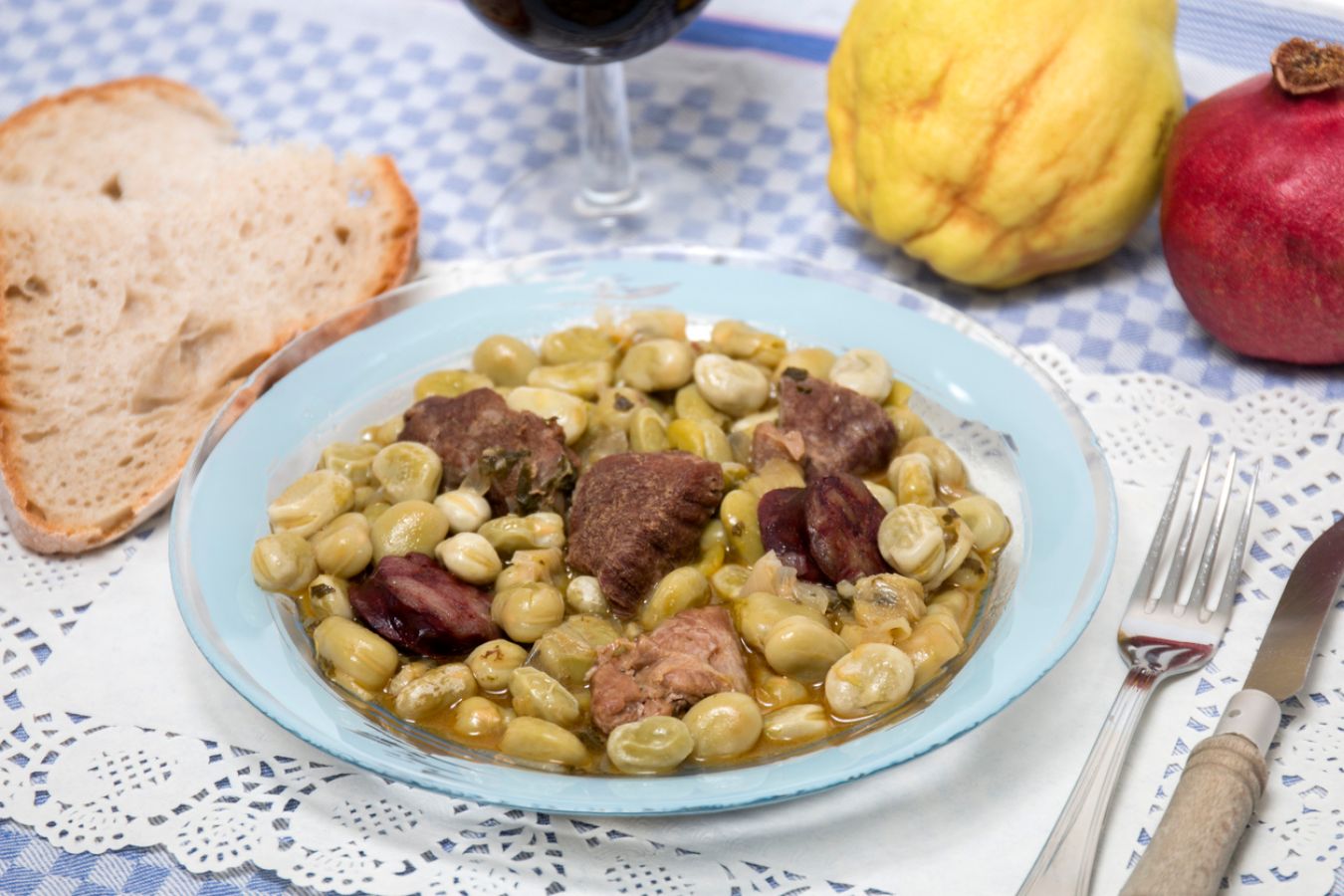
As the weather starts to cool, this is the kind of Portuguese food I love coming back to.
Favas à Portuguesa is a traditional dish made with broad beans, pork, Portuguese sausage, garlic, onion and herbs. It is simple, filling and full of flavour, which makes it perfect for the start of autumn.
For people in Jersey, cooking beans slowly with pork is not an unfamiliar idea. Jersey bean crock has been part of the island’s food heritage for generations. Favas à Portuguesa takes that combination in a different direction, using broad beans alongside Portuguese sausages, olive oil, garlic and fresh herbs.
If you enjoy bean crock, chouriço, pork or hearty home cooking, Favas à Portuguesa is a very good dish to try.
What is Favas À Portuguesa?
Favas à Portuguesa simply means Portuguese-style broad beans.
There are different versions depending on the family and region, but the dish is usually made with broad beans, onion, garlic, olive oil, herbs and pork or Portuguese sausage.
Chouriço is a popular choice, but some recipes also include farinheira, morcela, pork belly or ribs.
As everything cooks together, the broad beans take on the flavour of the meat, garlic and olive oil. The result is a rich, savoury dish that works very well when the evenings start getting cooler.
It is not a complicated recipe. Like a lot of Portuguese home cooking, it is about using simple ingredients and giving them time to cook together properly.
What Does Favas À Portuguesa Taste Like?
The flavour depends a little on which sausages and meats you use.
With chouriço, you get a smoky flavour from the paprika and pork. Farinheira makes the dish richer and softer, while herbs like coriander or mint give it a fresher finish.
The broad beans become tender as they cook and absorb all those flavours.
It is savoury and filling, but it should not feel too heavy. A good version has a nice balance between the beans, the meat and the herbs.
If you already enjoy chouriço, bean dishes or slow-cooked pork, there is a good chance you will enjoy Favas à Portuguesa.
How To Make Traditional Favas À Portuguesa
There are many family versions of Favas à Portuguesa, so the exact ingredients can change. A traditional version brings together broad beans, Portuguese sausage, pork and simple seasonings.
Ingredients
- Broad beans
- Portuguese chouriço
- Pork belly or ribs
- Onion
- Garlic
- Olive oil
- White wine
- Bay leaf
- Fresh coriander or mint
- Salt and pepper
Method
- Gently cook the chopped onion and garlic in olive oil until soft.
- Add the pork and cook until it starts to colour, then add the sliced chouriço. Cook everything together for a few minutes so the sausage releases some of its flavour into the pan.
- Add the broad beans and bay leaf, followed by a splash of white wine.
- Add a little water if needed, then cover and leave everything to cook gently until the beans and pork are tender.
- Finish with fresh coriander or mint and check the seasoning before serving.
Some versions of Favas à Portuguesa have plenty of sauce, while others are much drier. Some families also add farinheira or morcela for an even richer dish.
There is no single correct version. Like many Portuguese family recipes, everyone has their own way of making it.
Other Ways To Make It
Once you have tried the traditional version, you can change the dish depending on what you enjoy.
Farinheira works very well with broad beans because its soft texture mixes into the dish and adds richness.
Morcela can also be used if you prefer stronger flavours.
You can add ribs or more pork if you want to make the dish more substantial, particularly for a weekend meal.
Or, if you want to keep things lighter, use less meat and add plenty of fresh herbs.
That is one of the nice things about Favas à Portuguesa. You can make it as simple or as generous as you like.
What To Serve With Favas À Portuguesa
Favas à Portuguesa can easily be served as a complete meal.
Good bread is probably the most important thing to put alongside it, especially if you have plenty of sauce in the pan.
A simple green salad also works well because it gives you something fresh alongside the beans and sausage.
You could also serve it as part of a larger Portuguese meal with olives, cheese and bread in the middle of the table.
For autumn, I would keep it simple. A bowl of Favas à Portuguesa, some crusty bread and a glass of Portuguese wine is enough.
Wine Pairing For Favas À Portuguesa
Favas à Portuguesa works particularly well with Portuguese red wine.
If you are making the dish with chouriço, pork or farinheira, I would choose a medium-bodied red with enough flavour to stand up to the sausage without overpowering the broad beans.
A red from the Alentejo is a good option. These wines often have plenty of fruit and work very well with pork, sausage and slower-cooked dishes.
If you make a lighter version with fewer meats and more fresh herbs, a Portuguese white can also work.
But as we head into autumn, I would probably reach for the red.
Why Try Favas À Portuguesa?
Favas à Portuguesa is a good example of how Portuguese cooking can take simple ingredients and turn them into something very different.
At Divino, I love helping people in Jersey try Portuguese ingredients they may not have cooked with before.
If you enjoy bean crock, sausages and simple home cooking, give this one a go.
Saúde!